
Clinical Data Science Lab
Office
Psychology Building 330
Fuller Theological Seminary
180 N Oakland Ave
Pasadena, CA 91101
MISSION
Our lab does empirical studies to understand abnormal psychological aspects (e.g., PTSD, mild traumatic brain injury) of humans using (neuro-) psychological assessment tools (e.g., MMPI) as well as brain imaging (e.g., PET scans of Iraq/Afghanistan veterans). We apply conventional methods popular in social sciences as well as more recent developments in artificial intelligence such as machine learning and deep neural networks to examine the complexity among psychological constructs.
Some popular research agenda items in our lab are:
Artificial Intelligence (Machine Learning and Deep Learning)
- Unsupervised/supervised learning on text data and assessment data (classification; Latent Dirichlet Allocation; structural topic model)
- Brain imaging (PET images among veterans with PTSD and/or mild traumatic brain injury)
Research on or with psychological assessment
- Personality (MMPI, Big Five, sentence completion tests, etc.)
- Intelligence (WAIS-IV)
- Neuropsychology (D-KEFS, BVMT, HVLT, or Rey-O)

PROJECT
How Can We Deploy Artificial Intelligence to Analyze the Data from Psychological Assessment Measures Such as the MMPI?
The authors applied machine learning (ML) to the item responses of 44,846 MMPI-2 (Butcher et al., 1989) profiles to identify important predictors of gender identity, utilizing ML algorithms’ capacity to learn and recognize structural relationships in the data without being explicitly programmed or hypothesized (Samuel, 1959). Several ML algorithms, including XGBoost and deep neural networks, were trained on a train set using a 5-fold cross-validation to predict each profile’s gender from the item responses. Their predictions were then compared with each profile’s reported gender, a proxy variable for gender identity. Their prediction accuracy on the test set ranged from 96.09% to 97.06%. The majority of the 20 most important item responses for gender prediction identified by ML belonged to the seven-item Feminine Gender Identity scale in Martin and Finn (2010), who studied it using factor analysis and expert judgment, thereby demonstrating the validity and usefulness of ML for psychological research.

PROJECT
Neuropsychological Presentations of Mild Traumatic Brain Injury and Posttraumatic Stress Disorder Among Veterans
Objective: To explore the neuropsychological sequelae of blast-induced mild traumatic brain injury (mTBI) and posttraumatic stress disorder (PTSD), several neuropsychological tests and self-reported measures of cognitive and emotional functioning were administered to 138 Operation Iraqi Freedom (OIF)/Operation Enduring Freedom (OEF) veterans. We hypothesized that veterans affected by mTBI and PTSD would manifest differences in neuropsychological testing and self-report measures compared to a group of healthy veteran controls and to veterans with only PTSD. Results suggest that among OIF/OEF veterans with blast-induced mTBI, PTSD with its accompanying emotional distress may be a significant determinant of subjective sense of well-being both cognitively and emotionally. The objective discrepancy in PS between the comorbid group and the healthy controls also appears largely due to PTSD more so than the remote blast-induced mTBI, as the group mean difference in PS became negligible after controlling for PTSD levels.

PROJECT
Dimensions of Religion and Spirituality: A Topic Modeling Approach (Structural Topic Model)
In lieu of the traditional text data analysis methods, structural topic modeling was utilized to analyze the text contents of 255 self-report inventories of religion and spirituality (R/S) published from 1929 to 2017. The study had two objectives: (a) to clarify and identify the latent dimensions of R/S inherent in the items of the measures; and (b) to examine and demonstrate the usefulness of a longitudinal topic modeling in the study of R/S. We identified 5,617 unique text terms from the measures and fitted topic models on those terms to extract latent dimensions called topics. We also simultaneously analyzed the longitudinal effect of publication decade (i.e., 1950s–2010s) on the topics. A topic model with three topics was chosen to best support the data: Experience of Transcendence (Topic 1), Engagement in Transcendence (Topic 2), and Essence of Transcendence (Topic 3). In addition, the longitudinal analysis revealed that Topic 1 showed a continual increase over the decades, while Topics 2 and 3 both demonstrated a gradual decrease, in effect matching the general trend of Topic 1’s increasing popularity in society and academia.

PROJECT
Religion, Cognition, and Emotion: What Can Machine Coding Tell Us About Culture?
As cultural conflicts are intensifying locally and internationally in the aftermath of COVID-19 pandemic, fine-tuned investigation of culture/religion, especially that of the marginalized populations, holds the potential to reduce disparity and suffering in the global village. This study used 3 textual analysis programs—Topic Modeling, C-LIWC, and SSWC-Chinese—to shed light on the differences in cognition and emotion between two communities with radically different religious beliefs (Bimo and Christianity) among the Yi ethnic minority in Southwest China. Findings from these programs replicated the manual coding results of the previous study, and confirmed the prediction that cultural differences in cognition and emotion between the Yi-Bimo and the Yi-Christian fall along the divide between strong-ties and weak-ties rationality (Sundararajan, 2020a). Demonstrating an edge of advantage over manual coding, this machine-assisted analysis lends convergent validity to the previous study, and presents a more nuanced picture of diversity in emotion and cognition among the Chinese, with practical implications for future research and intervention for the marginalized populations.
PROJECT
Quantitative Textual Analysis of the Rotter Incomplete Sentence Blank (RISB-2) Responses
Despite its popularity as an assessment within counseling settings, the RISB-2 sentence completion test is often used in a subjective manner and interpreted independent of its official scoring manual. This project seeks to examine the validity of the RISB-2 via quantitative textual analysis of an existing dataset of scored RISB-2 assessments. As a part of this process, an AI-based scoring system will be developed which can score responses and match them to one of three possible categories.
PROJECT
Research Collaboration with Huntington Medical Research Institute (HMRI)
The collaboration with HMRI involves administering, scoring, and interpreting neuropsychological batteries in pursuit of discovering deteriorating cognitive functioning over the course of a participant's lifetime. This is done in order to better understand what loss of functioning is more predictive of early signs of Alzheimer's Disease. The current projects being done in this lab involve comparing biomarkers such as amyloid levels and urine DCA levels to relevant neuropsychological domains.
SELECTED PUBLICATIONS
1. Patel, S., Kim, S.-H., Johansen, C., Meier, A., Nolty, A. T., Delgado, N., Fernandez, N., Dekel, N., Folbrecht, J., Mullins, W., & Behrendt, C. (2021). Threshold Score for the Self-Report Pediatric Distress Thermometer Rating Scale in Childhood Cancer Patients. Psycho-Oncology, 1-9. http://doi.org/10.1002/pon.5583
2. Kim, S.-H., Rising, S., Green, R., & Sin, C. (2020). Machine learning analysis of the MMPI-2 items for gender identity. Journal of Asia Pacific Counseling, 10(2), 79-88. http://doi.org/10.18401/2020.10.2.10
3. Sundararajan, L., Ting, R. S., Hsieh, S.-L., & Kim, S.-H. (2020). Religion, Cognition, and Emotion: What can automated text analysis tell us about Culture? The Humanistic Psychologist. https://doi.org/10.1037/hum0000201
4. Kim, S.-H., Martin, B. J., Lee, N., Suh, J., Walters, D., Silverman, D. H., & Berenji, G. R. (2020). Examining Post-traumatic Stress Disorder as a Key Post Injury Risk Factor in OIF/OEF Veterans with Blast-Induced Mild Traumatic Brain Injury. Neuropsychology. Advance online publication. https://doi.org/10.1037/neu0000678
5. Kim, S.-H., Lee, N., & King, P. E. (2020). Dimensions of religion and spirituality: A longitudinal topic modeling approach. Journal for the Scientific Study of Religion, 59, 62-83. doi:10.1111/jssr.12639
6. Lim, E.-M., & Kim, S.-H. (2020). A validation of a multicultural competency measure amongst South Korean counselors. Journal of Multicultural Counseling and Development, 48, 15-29. doi:10.1002/jmcd.12161
PEOPLE
Faculty

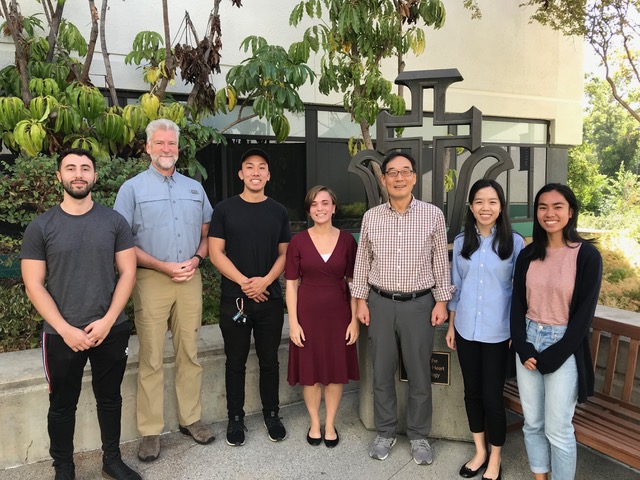
Sung H. Kim
Professor of Psychology
BA, SEOUL NATIONAL UNIVERSITY, KOREA
MA, SEOUL NATIONAL UNIVERSITY, KOREA
PHD, UNIVERSITY OF TEXAS AT AUSTIN
Students
Elise Chan, PsyD, 2026
Samuel Salamanca, PhD, 2027
Rachel Woo, PhD, 2027
Katie Bryant, PsyD, 2028
Ruby Chi, PsyD, 2028
Debra Ruddell, PsyD, 2028
Erica Song, PsyD, 2028
Daria Loginova, PsyD, 2029
Dwight Ellie, PhD, 2030
Nakia Rhodes, PhD, 2030
Jacquelyn Sierra, PhD, 2030
Ivonne Rodriguez Baez, PhD, 2031

Contact Us
phone: 626.584.5544
email: [email protected]
Staff
Nicole DeCamp
Research and Grant Administrator
[email protected]
Address
180 N Oakland Ave
Pasadena, CA 91101