

PhD in Theology
School of Mission and Theology
Center for Advanced Theological Studies
The PhD in Theology program at Fuller Seminary equips faculty and other leaders through the cultivation of research capacities and skills, global sensibilities, ecclesial commitments, theological discernment, personal and vocational formation, and the craft of teaching and learning.
Rigorous Scholarship
Ecclesially Located
Diverse Learning Community
Mentor-Driven
Request More Information About the PhD in Theology
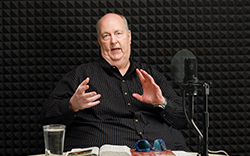
Faculty
Faculty mentors work with PhD students in three primary concentration areas, New Testament, Old Testament, and Theological Studies.
In the Center for Advanced Theological Studies (CATS), “Theological Studies” is defined integratively, with students in this concentration working with faculty mentors specializing in Christian ethics, church history and historical theology, public theology, political theology, practical theology, Pentecostal studies, systematic theology, and theology and culture.

Residential and Hybrid Study
At this time, students needing a U.S. Student Visa for their studies must complete their work in residence on Fuller Seminary's Pasadena campus.
Students participating in the hybrid modality complete the bulk of their coursework from a distance through synchronous and asynchronous participation in doctoral seminars. Hybrid modality students must complete 26 quarter units through hybrid coursework, which entails visiting campus on four separate occasions for approximately one week at a time.
PhD Theology students may opt to complete the program in residency on or near the campus in Pasadena, California, or primarily from a distance. Those who choose to pursue the program primarily from a distance are required to attend a minimum of two intensive sessions, each at least one week long, on campus during their first year of PhD study. These intensives will include one week in the Fall Quarter and one week in the Spring Quarter.
International students must obtain a valid student visa for any time spent in the US for PhD Theology study, whether they are making short-term visits to the US for intensive coursework or relocating for an extended period of residency in the Pasadena area.

Before You Apply
Fuller’s PhD in Theology prepares graduates for vocations as faculty in theological programs in seminaries, colleges, and universities; and as leaders in ecclesial and paraecclesial institutions and organizations devoted to serving the church in the world. The PhD program equips faculty and other leaders in several ways:
- Cultivating research capacities and skills
- Encouraging global sensibilities
- Nurturing ecclesial commitments
- Promoting theological discernment
- Fostering personal and vocational formation
- Training in the craft of teaching and learning
CONCENTRATIONS
PHD IN THEOLOGY STUDENTS PURSUE RESEARCH IN ONE OF THREE CONCENTRATION AREAS:
- New Testament
- Old Testament
- Theological Studies
THEOLOGICAL STUDIES CONCENTRATION STUDENTS PURSUE RESEARCH IN ONE OR MORE OF THE FOLLOWING RESEARCH DISCIPLINES:
- Christian Ethics
- Church History
- Historical Theology
- Liturgical Theology
- Practical Theology
- Public Theology
- Systematic Theology
- Pentecostal Studies
- Theology and Culture (arts and media)
GRADUATES OF THE PHD IN THEOLOGY PROGRAM SHOULD EVIDENCE THE FOLLOWING:
- A comprehensive knowledge of their field of theological study
- Research skills appropriate to an area of theological exploration, sufficient to engage in original research and writing that advances theological understanding in the service of the global church
- Critical reflection on the vocation of ecclesially informed theological scholarship, particularly with regard to teaching and learning, as well as research
- Hospitality toward diverse theological approaches and positions, traditional and emerging, characteristic of the church catholic
- Capacities for the cultivation of theologically reflective practices of Christian discipleship

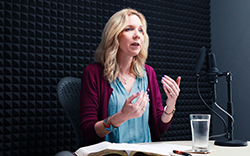
Faculty Mentors
Explore a collection of videos featuring PhD faculty mentors discussing their areas of expertise and their thoughts on formational doctoral studies
Applying for Admission
ADMISSION REQUIREMENTS
Applicants must have a first theological master’s degree with a foundation in biblical languages (either an MDiv or Fuller’s MA in Theology, or its equivalent, from an ATS-accredited school with a minimum of 80 quarter credits), and a cumulative graduate grade point average of 3.5 or above. Applicants wishing to have their transcripts assessed concerning this requirement should contact the Office of Admissions for details.
During the PhD program, students will need to acquire skills in up to three research languages (in addition to required biblical language requirements), as needed for their concentration. It is highly recommended that applicants begin their study of research languages prior to beginning the program.
To be considered for admission to the PhD in Theology program, applicants must submit an online application, essay responses, writing sample, three academic references, and official transcripts from all prior post-secondary study. Applicants for whom English is a second language must provide test scores from an approved English language proficiency exam. Some requirements vary by concentration and/or research area of interest. Learn more about application requirements for Fuller’s PhD in Theology.
APPLICATION DEADLINES
Online application opens: August 1
Application and file completion deadline: January 6
Notification date: March 15
Degree Completion Requirements
THE PHD IS AWARDED UPON SUCCESSFUL COMPLETION OF THE FOLLOWING:
- Research language requirements
- Coursework consisting of 58, 800-level units through seminars or directed readings
- Comprehensive examinations
- A dissertation proposal
- A scholarly dissertation based on research in the area of the student’s academic focus
The PROGRAM INCLUDES THESE COMPONENTS:
STAGE ONE
Stage One of the PhD program consists of 46 units of seminars and directed readings, including a methods seminar or foundational course in the student’s theological studies track. After 46 units have been completed, students will take four comprehensive examinations. Students who pass the comprehensive examinations will become candidates and move into Stage Two.
STAGE TWO
Stage Two of the PhD program consists of completing another 12 units of directed readings related to dissertation research and writing. Students will pass a dissertation proposal and write a dissertation demonstrating knowledge of field research, evidence of independent research, an original contribution to the field, and appropriate presentation and format.
- Students will have a primary mentor under whom they design their 58-unit program of seminars and directed readings.
You May Also Be Interested In
Doctor of Intercultural Studies (DIS)
The DIS helps experienced leaders integrate theory and practical research to effect change in their context of service
The PhD ICS enables practitioners to build a missiological framework on top of previous graduate work in theology to produce a thesis and be equipped for intercultural ministry or PhD research
Fuller’s practice-oriented Doctor of Ministry (DMin) program encourages ministry leaders to think creatively, cultivate new skills, and nurture their hearts to pursue their calling with excellence and passion in an ever changing world.
Contact Us
Contact
Office Hours
Monday–Friday
8 am – 5 pm (Pacific Time)
To view in-person Welcome Center hours for the Pasadena, Arizona and Houston campuses, click here.