

Missiology and Leadership in a Liminal World Cohort
Doctor of Global Leadership
Fall 2027
Application Deadline: August 7, 2027
Overview
We are in an era of polycentric Christianity, in which the faith is established on all inhabited continents of the world and mission is understood as “from everyone to everywhere.” However, this widespread recognition of the current polycentric period of Christianity does not imply that the church is in a settled state. Rather, global mission and the global church are in a liminal space. This liminality arises from many factors.
Historically, though the “modern missions” era has passed its heyday, that period continues to profoundly shape contemporary mission theory and practice. While missionaries from the majority world now surpass those from the West in number, the majority world mission movement is yet to reach a full state of flourishing. Geopolitically, the era of unipolar politics is over and a multipolar world is emerging. Migration remains a powerful force shaping societies and churches worldwide, even as growing opposition raises new questions about its future. Missiology itself is under pressure to recast itself as a global, rather than an exclusively Western, academic discipline.
This cohort will help leaders navigate the complex, liminal realities of their ministries and contexts. In a supportive community of practice, participants will engage in missiological reflection and develop practical leadership skills to lead faithfully amid uncertainty and change. The goal is maximum gospel faithfulness in this liminal moment.
Schedule
Year One: Missiology in a Liminal Space (Foundations and Research Design, 14 units)
Fall (Sept–Dec) 2027: Research Methods, 4 units, online
Winter (Jan-Mar) 2028: Missiological Foundations, 4 units, online with in-person intensive February 21-25 in Pasadena, CA
Spring (Mar–June) 2028: Missiological Foundations and Research Applied, 6 units, online
In the first year, students will cultivate broad familiarity with missiology as a discipline, then develop an understanding of current critiques of the discipline and challenges arising from sources such as World Christianity and majority-world missiologies, in order to form an understanding of how missiology itself is responding to this liminal moment. By the end of the year, students will also have begun to map the specific literature related to their own identified challenges and contexts.
Year Two: Engaging Liminal Spaces (Contextual Analysis, 14 units)
Fall (Sept–Dec) 2028: Studying Contexts, 4 units, online
Winter (Jan–Mar) 2029: Issues of Context, 4 units, online
Spring (Mar–June) 2029: Contextual Analysis Applied, 6 units, online
The second year will help students foster an understanding of how to theoretically and practically navigate the liminal spaces of their local and ministry contexts; in other words, help them understand contextualization on both theoretical and practical levels. This understanding will help provide the appropriate context for the students to select appropriate research designs for their individualized contexts and to help execute the data gathering process using appropriate tools.
Year Three: Leadership and Change Dynamics (14 units)
Fall (Sept–Dec) 2029: Change Dynamics, 4 units, online
Winter (Jan–Mar) 2030: Leadership Change, 4 units, online and in-person intensive February 25- March 1 in Pasadena, CA
Spring (Mar–June) 2030: Leadership and Change Dynamics Applied, 6 units, online
Students will focus in the third year on the development of adaptive and polycentric leadership skills and frameworks, synthesizing these insights with those gained from the prior studies of missiology and liminality as they relate to their ministry contexts and dissertation emphasis. The goal is that students will gain competency in leadership in liminal contexts and further develop the theoretical basis for the leadership and change portion of their dissertation.
Year Four: Integration (12 units)
Fall (Sept–Dec) 2030: Missiological Integration, 4 units, online
Winter (Jan–Mar) 2031: Dissertation Writing Part A, 4 units, online
Spring (Mar–June) 2031: Dissertation Writing Part B, 4 units, online
The focus of the final year will be on synthesizing years 1, 2, and 3 to complete their dissertations. We envision dissertations that grapple with the literature and theoretical issues, report on field research, and relate findings to a plan of action for meaningful change.
Faculty
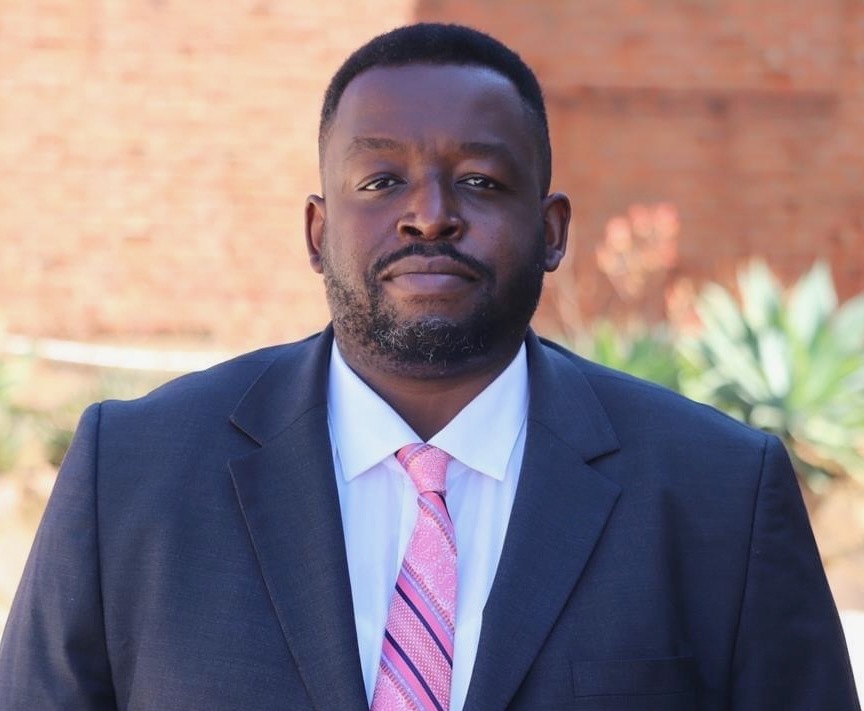
Andrew Mkwaila is a majority world missionary with over 15 years of experience in missiological education. Ordained with the Assemblies of God, he has served with numerous seminaries and Bible schools, equipping leaders for cross-cultural ministry and church leadership. His ministry has spanned Malawi, the United States, and the United Kingdom, where he currently pastors in Manchester. In addition to his pastoral role, Dr. Mkwaila is actively involved in missions mobilization and serves as a consultant in theological education.
Learn More and Connect with an Admissions Counselor
Contact
Chat with an Admissions representative
Office Hours
Monday – Friday
8 am – 5 pm (Pacific Time)
To view in-person welcome center hours for Pasadena, Arizona and Houston, click here.