
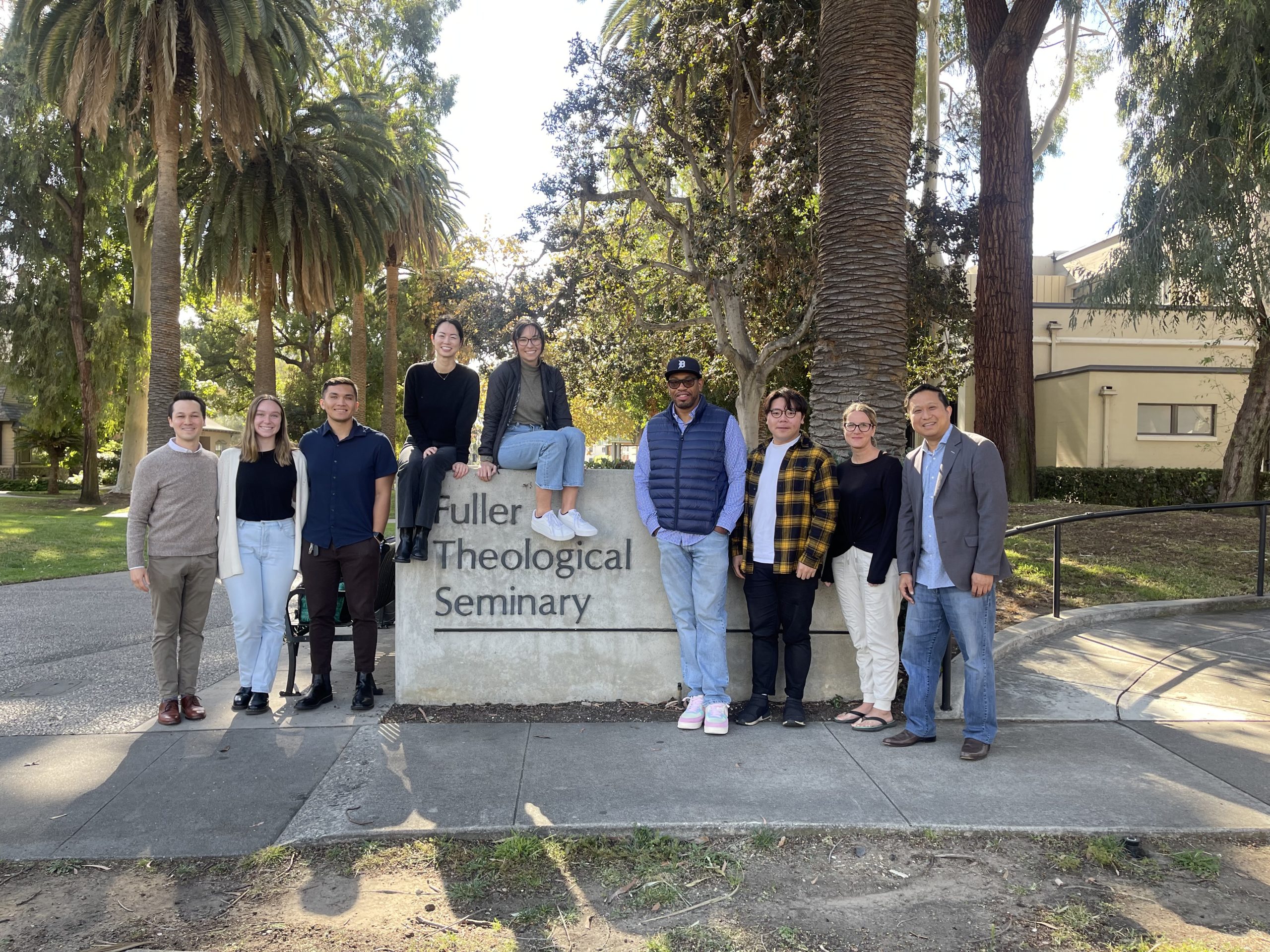
Spiritually and Emotionally Sustainable Leadership
Office
Payton 238
Fuller Theological Seminary
135 N Oakland Ave
Pasadena, CA 91182
Mission
Dr. Wang’s lab focuses on the holistic formation of global Christian leaders, inclusive of the formation of emotional health and resilience alongside the leader’s spiritual and intellectual formation. Work from this lab seeks to bridge research (empirical, theological, theoretical) to practice, with outputs ranging from traditional peer-reviewed journal publications to culturally-decentered and practical resources for Christian leaders around the world.
PROJECT
Global Formation Project (Funded by the Templeton Religion Trust)
What is the impact of a seminary education on the spiritual, character, and virtue development of seminarians who will one day lead future churches, denominations, and NGOs? To date, the answer to this question remains largely unknown—especially from an empirical standpoint. In fact, one of the most pressing issues facing the world of theological education today concerns the problem of formation and assessment--that is, how can one accurately and robustly assess whether changes in character and spiritual life have occurred in their students? In partnership with the Association of Theological Schools (ATS) and an ecumenical group of 18 North American seminaries, we collected 3-years (6 timepoints) of data from over 1,500 seminary students prior to and during the COVID-19 pandemic and are in the midst of launching several global initiatives to help seminaries better support and equip their faculty with data-informed tools and insights to more thoughtfully and effectively shape and support the character, spiritual life, and emotional well-being of their students.
PROJECT
Narrative Focused Trauma Care (Funded by the Allender Center)
The Allender Center is activating a project to assess and identify the core conceptual framework that undergirds the work we do called Narrative Focused Trauma Care, which is based on the lifelong work of Dan Allender. Our desire is to gain further insight into how and why our model works in order to create a formalized and more replicable methodology, and publish details about the model. This project is a significant undertaking, seeking to articulate and publish a series of meaningful works on a model of trauma care (in the research literature, for faith-based mental health professionals, and for a general population) that has been many years in the making.
PROJECT
Resilient Church Collective: A Trauma-Informed Community Network (Funded by the Lilly Endowment)
The year 2020 was devastating — particularly to African-Americans and other people of color. The COVID-19 pandemic highlighted major racial and ethnic health disparities. As the coronavirus spread, tragedy of a different kind struck: the killings of unarmed Black people at the hands of police. We feel these traumas individually and we also feel them collectively as a community. And as has been the case for centuries, many of us are turning to our houses of worship for solace, guidance, and healing. However, church leaders need guidance, too, as they help congregants process and heal from these recurring devastating events. The Resilient Church Collective initiative aims to do just that—equip and mobilize African-American churches in Texas to respond to the crises their congregants are facing and to do so in a culturally-congruent, faith-integrative, and data/research-informed manner. Made possible by a $1 million grant from the Lilly Endowment Inc., the Collective will focus on churches serving African-Americans and other people of color, guiding the leaders of these churches through a framework of trauma-informed healing.
SELECTED PUBLICATIONS
1. Kim, S., Wang, D. C., Gin, D. H. C., Deasy, J. A., & Sandage, S. (2025). Contrasting experiences: Gender disparities in spirituality, character strengths, mental health, and social justice among next-generation religious leaders. Review of Religious Research. https://doi.org/10.1177/0034673X251336459
2. Wang, D. C. (2024). Christian mindfulness and global public health: A commentary and agenda. Mindfulness. https://doi.org/10.1007/s12671-023-02290-6
3. Brown, E. M., Chin, E. G., Wang, D. C., Lewis, B., Fort, C., Captari, L. E., Crabtree, S. A., & Sandage S. J. (2024). Adverse childhood experiences, religious coping, and congregational support among black clergy and religious leaders. Religions, 15(4), 396. https://doi.org/10.3390/rel15040396
4. Wang, D. C. (2024). Trauma, the Holy Spirit, and spiritual formation: Facilitating recovery in the mind, spirit, and body. Journal of Spiritual Formation and Soul Care. https://doi.org/10.1177/19397909241247147
5. Jankowski, P. J., Sandage, S., & Wang, D. C. (2022). Virtues as mediators of the associations between religious/spiritual commitment and well-being. Applied Research in Quality of Life. https://doi.org/10.1007/s11482-022-10046-y
6. Porter, S. L., Wang, D. C., Abernethy, A., Strout, S., Dillard, W., Yong, A., & van Vlastuin, W. (2021). Ecumenical and traditioned measurement: Measuring Christian maturation across distinct traditions of Christian spirituality. Journal of Spiritual Formation and Soul Care, 14, 137-161. https://doi.org/10.1177/19397909211041032
People
Faculty
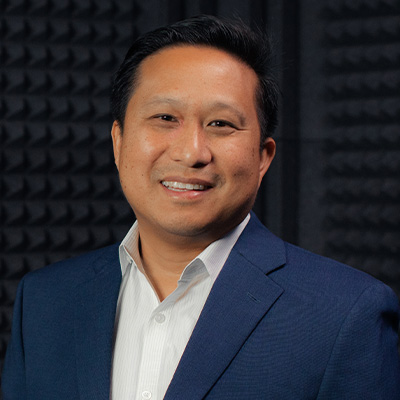
David C. Wang
Cliff and Joyce Penner Chair for the Formation of Emotionally Healthy Leaders
Professor of Psychology and Spiritual Formation
BA, UNIVERSITY OF CALIFORNIA, BERKELEY
THM, REGENT COLLEGE
PHD, UNIVERSITY OF HOUSTON
Students
David Lee, PsyD, 2026
Enoch Wong, PsyD, 2026
Jean Darlae Yim, PsyD, 2026
Damon Allen, PsyD, 2027
Ju-In Lee, PhD, 2027
Patricia Ssebakijje, PsyD, 2027
Daniel Wright, PsyD, 2027
Shaya Aguilar, PhD, 2028
Patricia Basalyga, PsyD, 2028
Anna Beery, PhD, 2028
Heeju Moon, PhD, 2028
Johnny Choe, PsyD, 2029
Abby Edwards, PhD, 2029
Grace Parker, PsyD, 2029
Andrew Wong, PhD, 2029
Kamique Stewart, PhD, 2031

Contact Us
phone: 626.584.5544
email: [email protected]
Staff
Nicole DeCamp
Research and Grant Administrator
[email protected]
Address
180 N Oakland Ave
Pasadena, CA 91101