
The Integration, Intersectionality & Intersubjectivity Research Lab
Office
Psychology Building 133
Fuller Theological Seminary
180 N Oakland Ave
Pasadena, CA 91101
MISSION
The Integration, Intersectionality & Intersubjectivity Research Lab exists to deepen the interdisciplinary formation of its members and to further the work of careful, prayerful, critical research in areas related to intersectional identity. The lab focuses on seeking to understand the lived experiences of historically marginalized communities as well as the allies who have committed themselves to a life of justice, and the societal factors that shape the realities that all of these communities face. We intentionally embrace a collaborative model of work – partnering with researchers inside and outside of our lab. Our desire is to embody our call, as Christ-oriented researchers, to pursue the principles of God’s kingdom here “on earth as it is in heaven” (Matthew 6:10).
PROJECT
The Impact of a Spiritually Conscious Group Therapy with Spiritually Integrative and Directive Therapeutic Components in the Healing of Trauma and Attachment in a Christian Student Population
This empirical study addresses the growing trend of clients seeking spiritually conscious care, incorporating spiritually integrative and directive interventions, for trauma healing and insecure attachment. Building on an earlier pilot study (Klinger et al., 2024), the current project investigates the impact of a semi-structured spiritually conscious attachment-based trauma-focused group therapy curriculum, including both spiritually integrative and directive components, on trauma healing and attachment in a Christian college student population.
PROJECT
Black Motherhood, Stereotypes, and the Need for Psychological Well-Being
This research study examines how Black mothers create and maintain psychological well-being while facing racialized stereotypes and intersectional marginalization. Current data indicates that Black women are four to five times more likely to experience pregnancy-related conditions compared to White women. The investigation builds upon a theoretical framework called the "AYA: Liberated Mother Model" (Kolade, 2024) which establishes a path of liberation for Black mothers experiencing racial discrimination and stereotypes. The background research demonstrates the unique challenges Black mothers face at the intersection of race, sex, and motherhood, as well as the ongoing maternal health crisis affecting Black women in the United States.
PROJECT
Exploring Acculturation, Resilience, and Trauma Among Arab Migrants in the U.S.: The Role of Age at Migration
The acculturation, resilience, and trauma experiences of Arab migrants in the United States represent an important yet minimally researched area of migration studies. This study aims to look into these factors' interactions by focusing on Arab migrants who moved to the U.S. at different life stages. By understanding how acculturation strategies and resilience mechanisms impact possible trauma experiences, this research seeks to provide comprehensive insights into the mental health and well-being of Arab migrants.
PROJECT
Exploring the Development and Maintenance of Anti-Racism Among White Protestant Clergy
Research on the experiences of clergy highlights numerous stressors associated with pastoral ministry (Garner, 2013; Lee & Rosales, 2020; Lewis et al., 2007; Sielaff et al., 2021; Staley et al., 2013). A handful of recent studies suggest that—given the current socio-political climate in the United States—clergy who elect to publicly address social issues (e.g., racism, white supremacy, and white privilege) may experience additional occupational and interpersonal challenges (Schade, 2021; Schade, 2022; Smidt, 2016). Although a few studies document challenges experienced by White individuals who are committed to anti-racism (e.g., Lensmire, 2017; Malott et al., 2019), there are presently no studies that center the particular experiences, challenges, and coping strategies of White Protestant clergy.
Thus, the present study seeks to understand the following overarching question: What is the phenomenological experience of anti-racism among White Protestant clergy? Secondary questions include, (1) How do they understand their motivations (personal, theological, etc.) for anti-racism?, (2) What are the challenges (intrapsychic, interpersonal, and/or systemic) of anti-racism within their context?, and (3) How do they cope with and/or make meaning out of such challenges? (i.e., how do they sustain a commitment to anti-racism?). To explore these questions and analyze the data, the researchers will employ Consensual Qualitative Research (CQR) methodology, as outlined in Hill and Knox (2021).
SELECTED PUBLICATIONS
NOTE: All publications and presentations noted with an asterisk (*) have been written or given in collaboration with doctoral students.
1. *Sarpong, P. K., Davis, E. B., Cornwell, J. F. M., Fort, C. J., & Whetstone, T. (in press). The Black American religion, racism, and health study: An outcome-wide longitudinal analysis. Journal of Psychology of Religion and Spirituality.
2. *Stewart, J.D., Onyambu, F., Barrimond, V., & Fort, C. (2025). Resistance & Resilience: The Black Church’s Response to Community Violence and Racism. Translational Issues in Psychological Science.
3. Fort, C. J. (2024). Resources for the Mental Health of the Oppressed in the New Testament: A Contemporary Reading of Ancient Teachings. The New Testament in Color Commentary. General Editor: McCaulley, E.
4. Brown, E.M., Chin, E.G., Wang, D.C., Blaire, L., Fort, C., Captari, L.E., Crabtree, S.A. & Sandage, S.J. (2024). Adverse childhood experiences, religious coping, and congregational support among Black clergy and religious leaders. Religions.
5. Fort, C. J. (2024). Flourishing and sustainability in clinical graduate training programs: Introduction. (Justice Column). Journal of Psychology and Christianity, 42(4), 375-377.
6. Fort, C. J. (2023). Sustaining the work of justice in clinical & academic systems. (Justice Column). Journal of Psychology and Christianity, 42(3), 268-271.
7. Fort, C. J. (2022). Attending to history and context in the journey towards justice and equity in clinical practice. (Justice Column). Journal of Psychology and Christianity, 41(4), 326–330.
PEOPLE
Faculty
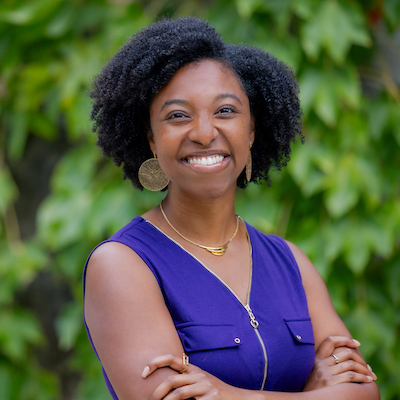
Christin J. Fort
Associate Professor of Clinical Psychology
PhD Program Chair
BA, WHEATON COLLEGE
MAT, FULLER THEOLOGICAL SEMINARY
PHD, FULLER THEOLOGICAL SEMINARY
Students
Jordan Rollerson, PsyD, 2026
Alize Spencer, PsyD, 2026
Sophie White, PsyD, 2026
Emma Rose Klinger, PhD, 2027
Rachel Kolade, PhD, 2027
Christy Lee, PhD, 2028
BreeAnna Long, PsyD, 2028
Jennifer Alcalde, PhD, 2029
Karen Saleeb, PhD, 2029
Abby Wright, PhD, 2029
Ronald Enos, PhD, 2030
Elizabeth Giles, PhD, 2030
Grenisha Holmes, PhD, 2030
Bikere Ikoba, PhD, 2031

Contact Us
phone: 626.584.5544
email: [email protected]
Staff
Nicole DeCamp
Research and Grant Administrator
[email protected]
Address
180 N Oakland Ave
Pasadena, CA 91101