
Welcoming the Foreigner Is Faith in Action
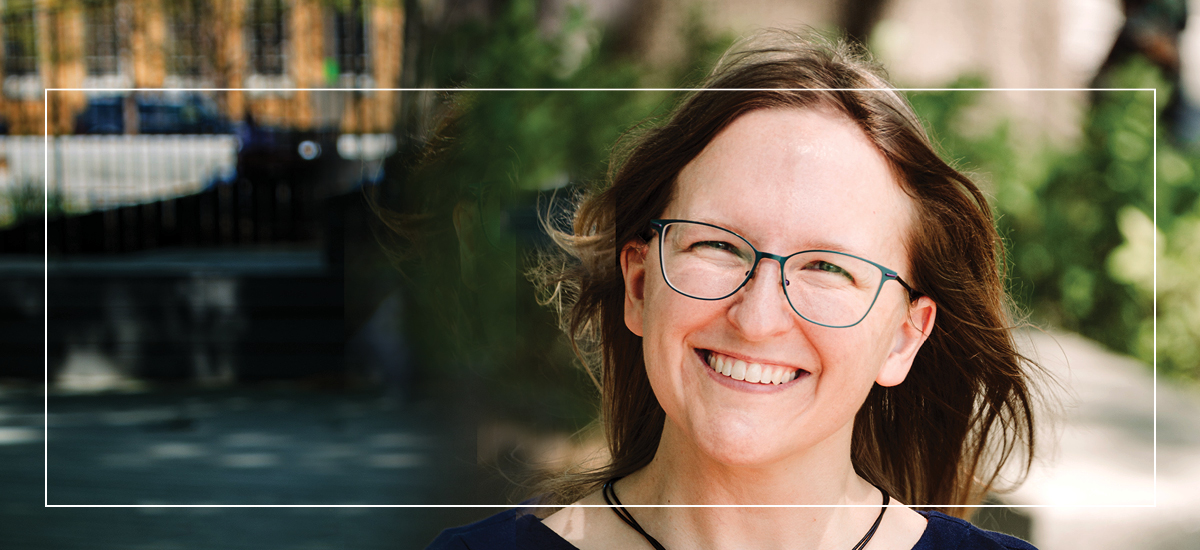
Ashley Glimasinski (MAICS ’18) helps others show the love of Christ to immigrant neighbors. She is the administrative director and education manager of We Choose Welcome, which empowers people to have brave conversations about immigration and to advocate for just immigration policies; she is also cohost of Hope in Action, a podcast helping Christians navigate immigration issues through legal insight with a faith-based lens. Her work sheds light on a complicated immigration system while teaching fellow Christians what it looks like to live out a faith that loves and welcomes.
Glimasinski, who is from the US, is no stranger to navigating the complex experience of migration and intercultural living. She taught in Japan for many years and also took part in the 11-month World Race missions program which took her to 11 different countries. Later, after her time at Fuller, she moved to Poland, where her husband is from. Now they live in the United States, where they’ve had to navigate the labyrinthine process of acquiring a green card and eventually citizenship for him. Glimasinski says, “I thought, I’m a US citizen, it’s going to be easy for him to come to the United States. But it was not easy!” There are a host of complexities to the process of immigration that she says most people don’t understand simply because they haven’t had to engage with it first hand.
Learning and Living Out Theology in the Real World
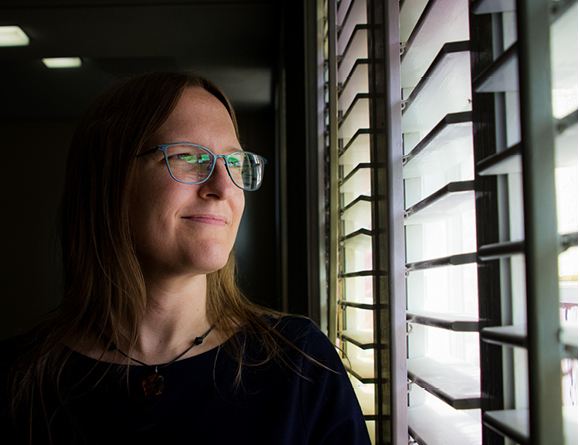 Her season at Fuller, where she received her MA in Intercultural Studies, provided Glimasinski with a theological lens to engage with her experience and her work. She’d first visited Fuller in 2015, after finishing the World Race, where she met an admissions counselor who told her the MAICS might be a perfect fit for somebody like her—somebody who felt she had a strong foundation of faith, who had experienced a breadth of cultures and faith traditions, and who wanted to build up a strong theology and missiology for the ministry God would call her to next. Glimasinski talks about an image she had in South Asia, when she was ministering in the slums and surrounded by houses built of corrugated metal, tarp, and plywood: “They’re houses, but they were fragile, and they could fall over at any time. I felt like my faith was like that, made up of things that I was told I should believe in.” Even though she was unsure about how to pay for graduate school, she took a faithful step to attend Fuller for the quarters she could afford, and God provided the rest through scholarships, internships, and surprise job opportunities until she graduated with her degree.
The lessons she picked up in her classes and from the experience of her community at Fuller continue to shape her life and ministry now. Besides what she learned by diving deeply into the Scriptures—about God’s heart for the foreigner and God’s compassionate and welcoming love —Glimasinski says she is thankful that “every class was about praxis. . . . Here’s the theology, but also, how does this apply? Why does this matter to us now?” Theological head knowledge, she says, can often keep us in the clouds, but her classes reminded her, “people live on earth.” When theology is grounded in the present realities and contexts, what does that mean for us and what does that mean for the people around us?
God’s Kingdom Is for Everyone
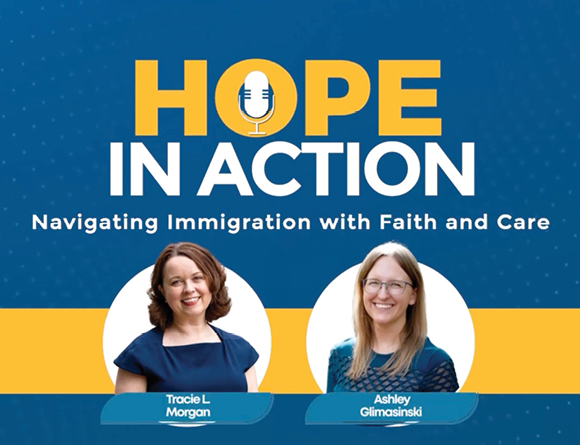 After working a few years for Welcome House, which provides temporary housing for refugees and equips them for flourishing as they adjust to life in the States, she’s currently educating others about the immigration process and empowering them to be faithfully hospitable to immigrants in their communities. At We Choose Welcome, Glimasinski and others “provide educational resources, action tools, and a supportive community for those seeking to take the next step in their advocacy for immigrants and refugees.” And through the Hope in Action podcast, which she co-hosts with immigration lawyer Tracie L. Morgan, they reach people who may already have a sense of God’s heart for the stranger but want to go deeper in understanding how to spread the word among their communities, to build bridges with those who might disagree, and to take practical, impactful steps to love their immigrant and refugee neighbors right where they are. The podcast’s first episodes, for example, summarize why immigration should matter to Christians, tackle the question “why don’t immigrants just come legally?”, break down facts about immigration law, and share real immigrant stories. The podcast’s stated hope is that it might be “a guide to clarity, compassion, and confident action.”
Glimasinski’s prayer for the church is that we never forget each other’s humanity and that we extend the love of Jesus in a way that faithfully reflects his heart for the world. She says, “God brings all people into God’s kingdom. God brings in the foreigner and the stranger. We’re all made in the image of God, and God loves us all. If we can’t see each other as human, then how do we go anywhere from there?”
Learn more about Hope in Action and We Choose Welcome.
Do you feel called to intercultural ministry? Learn more about Fuller’s Master of Arts in Global Missional Leadership (MAGML), which emphasizes both scholarship and praxis to give both seasoned and aspiring leaders the foundational skills to serve in various types of intercultural ministry no matter your context.
May 18, 2026
The Master of Arts in Global Missional Leadership (MAGML) is designed to equip both seasoned and aspiring leaders for various types of intercultural ministry. The program emphasizes both scholarship and praxis, giving students the foundational skills to pursue further studies or research opportunities, or to serve in practical ministries around the world.MA in Global Missional Leadership