
The Art of Pastoral Ministry
Fall 2026
Application Deadline: July 30, 2026
Overview
Those serving in pastoral ministry resonate with these words from Eugene Peterson: “I’ve loved being a pastor, almost every minute of it. It’s a difficult life because it’s a demanding life. But the rewards are enormous—the rewards of being on the front line of seeing the gospel worked out in people’s lives. I remain convinced that if you are called to it, being a pastor is the best life there is” (The Christian Century, March 2002).
Lillian Daniel expresses the same sentiment: “I love being a minister. Even when the ministry is hard, it’s more fun than any other job I can imagine. Where else can you preach, teach, meet with a lead abatement specialist, and get arrested for civil disobedience all in the same week? . . . . But mostly I love observing God’s presence in the lives of people of faith. Mostly I love the moments when, from the position of paying holy attention to my own community of faith, I notice the power and presence of God” (This Odd and Wondrous Calling, 2009).
Pastoral ministry is not an easy vocation. It is full of joys and challenges, holy moments and frustrations. But if you are called to this work, it is the best life there is!
This cohort will explore essential crafts for pastoral ministry: worship and preaching, congregational formation, and missional leadership. Students will be guided by seasoned ministry practitioners to deepen their skills in these key areas of congregational life as they engage in the art of ministry.
Schedule
Year One: Missional Leadership: Cultivating Congregations that Live the Gospel (16 units)
Dr. Kurt Fredrickson
Fall (Sep–Dec) 2026: Reading and Seminar (6 units, online with in-person intensive in Pasadena, October 26-29, 2026)
Winter (Jan–Mar) 2027: Doctoral Research (4 units, online)
Spring (Mar–June) 2027: Integration (6 units, online)
Lesslie Newbigin reminded us that “the only hermeneutic of the gospel is a congregation of men and women who believe it and live by it” (The Gospel in a Pluralist Society, 1989). The church makes a difference in culture not as an abstract idea but as a real, visible, and embodied community of faith. Every congregation—no matter its context—is called to be more than a gathering place; it is called to be a missional outpost in its neighborhood.
In this first year, students will explore the catalysts and practices that can help congregations rediscover their missional calling. Together, we will consider how change is more often provoked than dictated, and how pastors play a vital role in nurturing a community’s imagination for God’s mission. Attention will also be given to the heart of the pastor—the inner life of the leader—as a key dimension of shaping and sustaining a truly missional community.
Year Two: Preaching and Worship: The Pastor as Theologian in Community (16 units)
Dr. Neal Presa and Dr. Kurt Fredrickson
Fall (Sep–Dec) 2027: Reading and Seminar (6 units, online with in-person intensive in Pasadena, October 25-28, 2027)
Winter (Jan–Mar) 2028: Doctoral Research (4 units, online)
Spring (Mar–June) 2028: Integration (6 units, online)
Preaching and worship are not merely practices of the church; they are themselves acts of theology. When a congregation gathers to worship, and when a preacher proclaims the Word, the church is actively expressing and embodying what it believes about God, the world, and the vocation of discipleship.
In this second year, students will reflect deeply on the interplay of theology, preaching, and worship as core dimensions of pastoral ministry. Together with seasoned practitioners, participants will examine how preaching arises from and is called forth by the worshiping community, shaped by context, and tested through the struggles of real life.
Special attention will be given to the person of the preacher—their formation, identity, and calling—as well as the church’s historic and theological traditions. In a culture often dominated by performance and consumerism, this year will invite leaders into the countercultural practice of recalibrating preaching and worship around God’s mission, renewing their own vocation as pastor-theologians in community.
Year Three: Formation and Care: Cultivating Congregational Wellness (16 units)
Dr. Mary Glenn and Dr. Kurt Fredrickson
Fall (Sep–Dec) 2028: Reading and Seminar (6 units, online with in-person intensive in Pasadena, October 23-26, 2028)
Winter (Jan-Mar) 2029: Integration (6 units, online)
Spring (Mar-June) 2029: Doctoral Project Writing (4 units, online)
In the third year, students will turn their attention to congregational care, formation, and holistic wellness. Congregations, like individuals, need nurture and formation that are both personal and communal. Rooted in Jesus’ promise of abundant life (John 10:10) and God’s vision of shalom (Jeremiah 29), the church is called to be a community of flourishing: physically, spiritually, relationally, and psychologically.
This year will examine biblical models, historical practices, and contemporary frameworks for cultivating abundant living and thriving communities. Students will explore how pastoral leaders create spaces of wellness through presence, accompaniment, pastoral care, and intentional formation.
Along the way, participants will deepen their leadership skills and develop practical tools for guiding congregations toward health and resilience. A key outcome will be the design of a contextualized spiritual health framework and wellness plan—for both the pastor and their congregation—drawing on the insights of Fuller’s Thrive Center.
Instructors

Kurt Fredrickson will be the convenor of this cohort throughout all three years of the journey, offering continuity and mentoring. He will also be the primary instructor for the first year.
As associate dean of Fuller’s professional doctoral programs—designed for leaders who are already serving in ministry, many in the church—Dr. Fredrickson utilizes his own MDiv, DMin, and PhD degrees from Fuller, along with his extensive church ministry experience, to prepare students for effective leadership in the 21st century. With an eye on trends in the church, Fredrickson helps church leaders understand and harness today’s cultural and global changes as they seek growth and revitalization for their congregations. With Fuller’s Cameron Lee, he co-wrote the book That Their Work Will Be a Joy: Understanding and Coping with the Challenges of Pastoral Ministry (2012). He is currently writing Pastoring in a Missionary Key.
Prior to joining Fuller in 2003, Fredrickson was on the pastoral staff of Simi Covenant Church in Simi Valley, California (40 miles north of Los Angeles) for 24 years, and served as senior pastor for 18. During his tenure at Simi Covenant, the church developed a strong mission orientation that included a broadening role in local compassion ministries, planting a Hispanic congregation in Simi Valley and becoming involved in global missions in Mexico, the Philippines, and Albania.
Frederickson continues to serve as supervising chaplain with the Simi Valley Police Department, as a member of the city’s Homelessness Task Force, on the board of the Free Clinic of Simi Valley, and as a member of the Rotary Club of Simi Sunrise. He was honored as one of the “Top 25 People of 2011” by the Simi Valley Acorn, and as the 2012 City Volunteer of the Year by the Simi Valley City Council.
Ordained in the Evangelical Covenant Church, Fredrickson has served in many leadership roles within that denomination: regional executive board, church revitalization task force, task force on the ordered ministry, and the board of church growth and evangelism. His blog, Church Then and Now, features timely updates and perspectives on changes in the church and culture, as well as helpful resources for pastors.
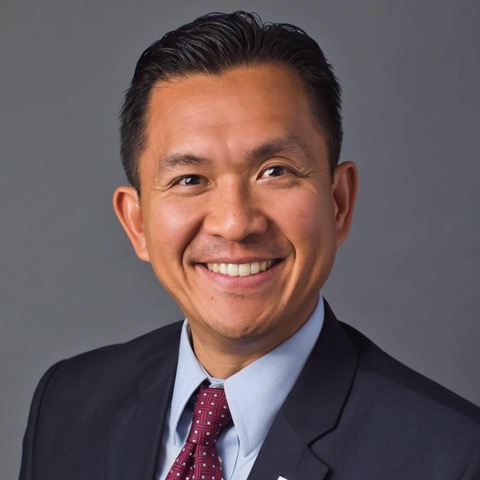
Neal Presa is a Filipino American Pacific Islander pastor, theologian, liturgist, and ecumenist, having served in local congregational, academic, ecclesiastical, and global ecumenical conciliar settings for over two decades. Dr. Presa is currently Executive Presbyter of the Presbytery of San Jose, where he supports 37 congregations, fellowships, worshipping communities, and affiliated nonprofits in Silicon Valley and the surrounding region. Additionally, he is Affiliate Associate Professor of Preaching at Fuller and a Senior Fellow for the Center for Pastor Theologians. His research and publication agenda connects pastoral ministry, liturgical theology, homiletical theory, ecumenics, and Asian American studies. He is the author/editor of nine books and over 100 essays, book chapters, and book reviews, including Worship, Justice and Joy (Cascade, 2025) in the Worship and Witness series and Ascension Theology and Habakkuk (Palgrave MacMillan, 2018) in the Asian Christianity in Diaspora series.

Mary Glenn joined Fuller’s faculty as assistant professor of the practice of chaplaincy and community development in 2022, after serving as an affiliate faculty member for more than a decade, beginning in the former School of Intercultural Studies. Dr. Glenn teaches courses in the School of Mission and Theology master’s degree programs, where she serves as a faculty member for the MA in Justice and Advocacy degree, as co-lead for the intercultural studies and urban ministries concentration and the MDiv chaplaincy concentration, and as the co-creator and co-chair of the MA in Chaplaincy (MAC) degree. She has taught in a variety of academic contexts. At Fuller, she initially taught on the topic of urban youth ministry with the Fuller Youth Institute. She is author of the chapter “Nineveh, God’s Mission of Love, and the Enemy” in the book God’s Mission in the Cities of the Bible (2021) and is author or coauthor of articles for Missiology: An International Review, FULLER Magazine, and the Journal of Youth Ministry.
Through her work as a pastor, chaplain, and educator, Glenn serves as a bridge-builder. Ordained nondenominationally, she has more than 20 years of youth/college/community pastoral experience. A lover of cities, particularly Los Angeles (which she calls home), she regularly leads urban immersions and downtown LA city walks. She has led community development organizations, including co-leading Cities Together, working with collaborative movements and leaders for city transformation. She has served as a certified chaplain for more than two decades with three different agencies and as a law enforcement chaplain trainer, and holds a certification in Critical Incident Stress Management (CISM). She previously served as a national board member with the Christian Community Development Association (CCDA) and as a board member with Central City Community Outreach in downtown Los Angeles/Skid Row. Glenn is a frequent speaker on suffering, trauma, the ministry of God’s presence, and God’s shalom.
Learn More and Connect with an Admissions Counselor

Chat with an Admissions representative
Office Hours
Monday – Friday
8 am – 5 pm (Pacific Time)
To view in-person welcome center hours for Pasadena, Arizona and Houston, click here.