
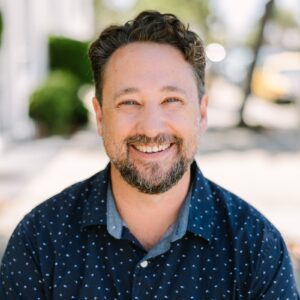
Faculty Mentor
About Jason
Jason is the Co-Lead Minister at The Oceanside Sanctuary in Oceanside, California, where he has served since 2015. He earned his M.A. from Fuller Theological Seminary and is currently a third-year Ph.D. student in the School of Mission and Theology. Jason has been a member of the Human Development faculty at Cal State University San Marcos since 2013, where he teaches human services leadership, social policy and social programs, and human development theories. He is ordained in both The Christian Church (Disciples of Christ) and the Vineyard Community of Churches. Jason is married to Jenell Coker, with whom he co-leads The Oceanside Sanctuary. They have partnered in ministry for over twenty years, serving small and large congregations in Utah, Ohio, and California. Together, they have three adult daughters and one grandson.
Education
Fuller Theological Seminary
Master of Arts in Global Leadership
Research Interests
Decolonizing Mission, Intercultural Theology, Anthropology of Christianity, and religious disaffiliation in the United States.
Publications
Coker, Jason A. “Otherwise the Same: Toward Decolonial Missiologies of the American Global North,” International Review of Mission 113 (2024), 143-158.
Fuller Seminary hosts these profiles as a courtesy to our doctoral students. Their views are their own and do not necessary reflect the views of the seminary.